Lube oil treatment on 2-stroke diesel engines | container vessels
Customer Case
System: Marine diesel engines
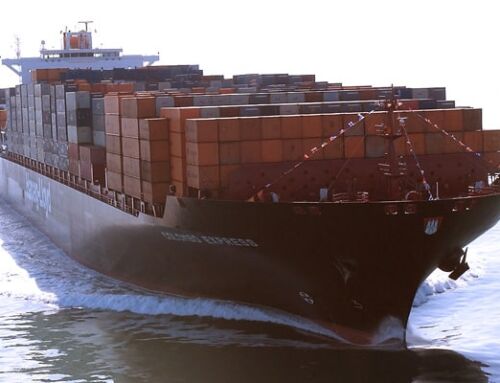
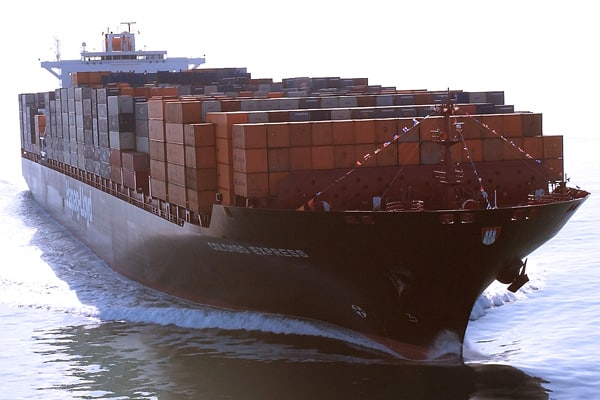
Vessels: Container vessels CMS “HONG KONG EXPRESS” and CMS “HAMBURG EXPRESS”, each 13.177 TEU
Main engines: 2-stroke diesel engines type MAN 11K98 ME MK 7.1 (derated to 45,100 kW at 84 rpm since 2015), low-speed 2-stroke diesel engines
Running hours: approx. 8,000 RHs/year
Lubricating oil, “HONG KONG EXPRESS”: Mobilgard 300, 11.9 cSt @ 100 °C
Lubricating oil, “HAMBURG EXPRESS”: LukOil Navigo 6 SO, 11.5 cSt @ 100 °C
Oil volume: 70 m³ (1.2 liter per kWMCR)
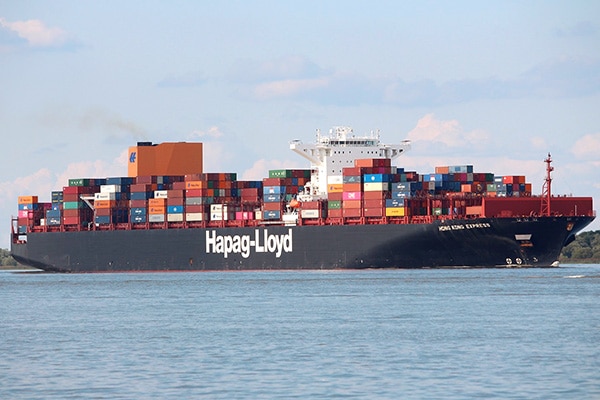
Container vessel “HONG KONG EXPRESS”
Tests: Conventional Systems vs. CJC® Lubricating Oil Filters
Test period: 45 weeks
Engine running hours: 5,244 RHs during the test period
Test start: approx. 24,556 RHs
Test end: approx. 29,800 RHs
Conventional lubrication oil treatment:
Two systems for each main engine.
Newly installed CJC® lubricating oil filters:
One CJC® 3×427/81 lubricating oil filter for continuous fine filtration and dewatering (24/7/365) was installed for each main engine. The four conventional lubricating oil treatment systems were not in operation during the test period.
Pump flow: 3,000 litres/hour
Filter material: 100 % natural fibres (cellulose)
Filter rating: 3 µm absolute, 1 µm nominal
Optional with oil condition monitoring
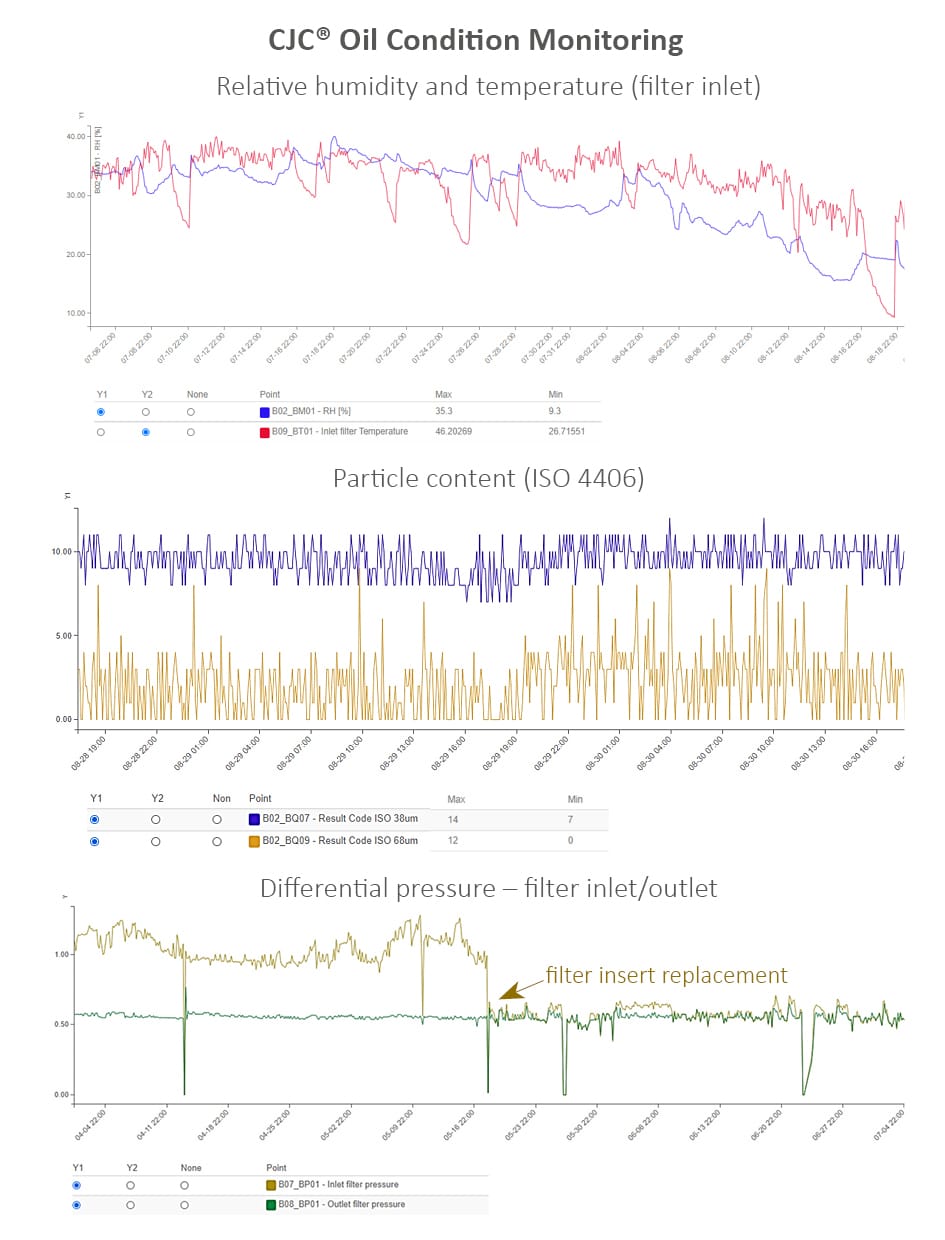
The installation of a CJC® Oil Condition Monitoring System on the Hong Kong Express enables the transmission of precise oil condition data in real time to the ship’s bridge. The sensor package detects differential pressure, temperature, relative humidity (RH%), and wear particles. Deviations from the normal condition and harmful effects can be indicated at the earliest and enable counteracting – timely, cost-efficient and projectable.
Approval from MAN Energy Solutions
No Objection Letter for CJC® Lubricating Oil Filter
CJC® filter type: Marine Lube Oil Purifier 27 or 427 with LOX filter elements
Two-stroke engines: All types and fuels
“Tests conducted on several ships using an offline lubrication filtration unit with a CJC® filter as the sole cleaning unit (without centrifugal operation) have yielded positive results […].“
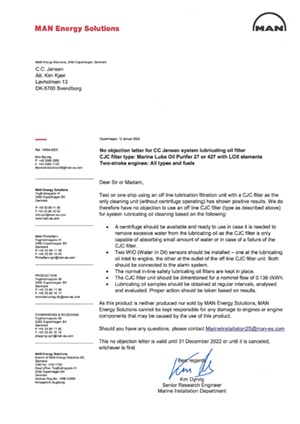
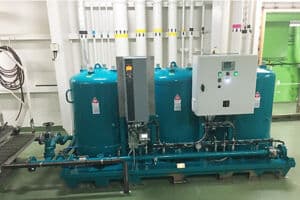
CJC® Lubricating Oil Filters for Marine Diesel Engines Installed on a MAN Engine
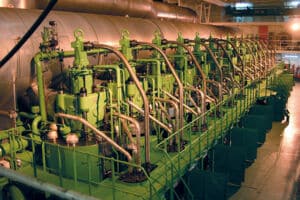
2-stroke diesel engine type MAN 11K98 ME MK 7.1, CMS “HAMBURG EXPRESS”
Result of the new lube oil treatment
Several independent oil laboratories (Filtrex, AlControl/Synlab) examined the weekly oil samples. They rated the oil condition as „normal“ throughout the whole test period:
- Particle and water content minimized
- stable viscosity
- Total Base Number (TBN)
- no impact on additives
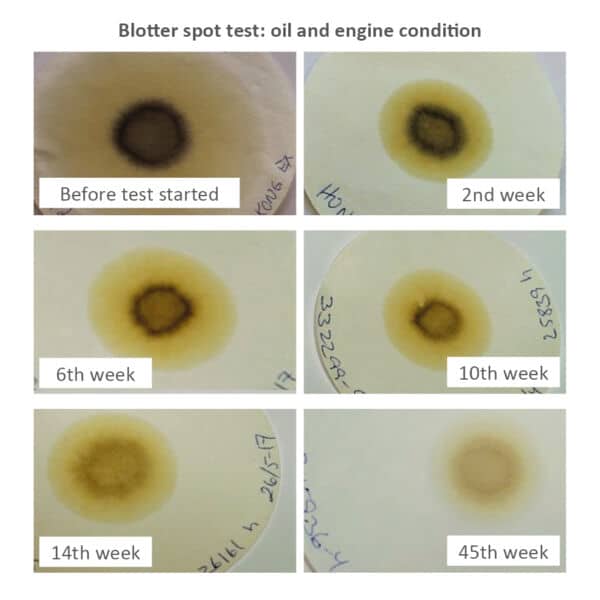
The spot test (see photos on the right) shows that, before and at the start of the test period, the lubricating oil was still heavily contaminated with dust, metal abradive, and other particles > 1 µm. In addition, the oil showed initial signs of aging (a brownish color) as well as a higher water content (jagged edges). Thermal stress at so-called hot spots (e.g., bearings) and particles resulting from component wear (copper, iron, aluminum) accelerate the degradation of the base oil as well as the additive decomposition, thereby hastening oil aging processes. The oil was not contaminated with fuel. Thanks to efficient oil care with CJC®—which continuously and permanently removes not only particles and free water, but also dissolved water in the oil, as well as oil degradation products and, where applicable, acids—oil cleanliness and dispersibility improved significantly during the test phase.
Savings
Approx. 98% lower lubricating oil losses in terms to lubricating oil treatment
≈ 9,846 litres of oil per year per ship
Thanks to the CJC® lubricating oil filter, Hapag-Lloyd saves 9,856 litres of lubricating oil per year and per ship solely as a result of reduced lubricating oil losses:
Oil losses due to filter insert replacement (CJC® Lube Oil Filter): only 144 litres/year
Approx. 97% less energy required for lubricating oil treatment
≈ 332,725 kWh per year and vessel
Thanks to the CJC® lubricating oil filter, Hapag-Lloyd saves 332,725 kWh per year per ship solely as a result of reduced energy consumption:
Energy consumption of the CJC® lubricating oil filter: only 10,253 kWh/year
Fewer emissions during berthing times in the port
When using conventional lubricating treatment systems during port times, the steam needed for the preheating (heating capacity 9 kW) of the lube oil – from 36 °C to 92 °C – has to be produced by the auxiliary boilers. With the CJC® lubricating oil filter, there is no need for combustion of fuel in the boilers while in port, since the lubricating oil does not need to be preheated—which means significant savings in fuel consumption and lower emissions while in port.
Approx. 96% less CO2 emissions in terms to lubricating oil treatment
≈ 154,535 kg CO2 per year and vessel
The extreme discrepancy between the two systems in terms of energy consumption and lubricating oil losses enables Hapag-Lloyd to significantly improve thecarbon footprint of the CMS “HONG KONG EXPRESS” and CMS “HAMBURG EXPRESS” by using the CJC® lubricating oil filter. The combustion of 1 litre of fuel or the thermal disposal of 1 litre of waste oil or sludge produces approximately 2.6 kgof CO2.
- LowerCO2 emissions due to reduced energy consumption
CJC® lubricating oil filters: only 6,247 kg ofCO2 per year
Operation: 6,247 kgCO2/year(2,403 litres of fuel/year × 2.6 kgCO2/litre) *
* 240 days shaft generator, HS-HFO (950 g/L), specific consumption 0.221 L/kWh and
116 days auxiliary diesel engine, MDO (880 g/L), specific consumption 0.261 L/kWh
- Lower CO2 emissions due to reduced oil loss:
CJC® Oil Maintenance System: only 374 kg ofCO2 per year
144 Litres oil losses due to filter element replacement/year x 2.6 kg CO2/Litre
Customer comment
„The CJC Lube Oil Purifier is proven as a reliable and efficient alternative for lube oil treatment during the excessive test periods on both vessels, which MAN Energy Solutions accompany. Continuous oil care ensures that oil cleanliness and lubricating oil properties are maintained within the specified ranges (viscosity, additives, base number, particle and water content) or improved (e.g., dispersibility). The high savings potential regarding oil losses, energy costs and CO2emissions is convincing – even as a retrofit. An easy system with a large effect.“
Superintendent, Hapag-Lloyd AG
Contact your maritime technical salesperson now
You would like to know more about the customer case? Let us start a conversation
Receive detailed information on the oil analyses, savings and calculations as well as a personal consultation specifically on your 2-stroke diesel engine, your lubricating oil treatment and your requirements and goals.
Write or call us.