

Minimize water in oil to < 100 ppm — within the shortest time
Desorber D10 from CJC®: Your solution for efficient oil drying
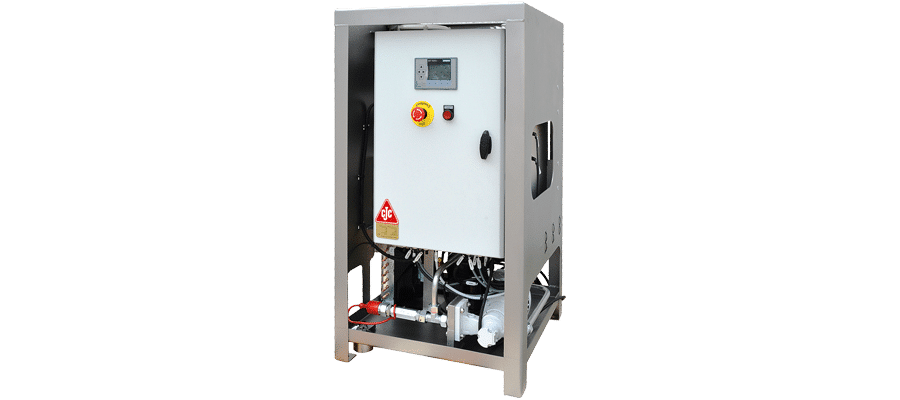
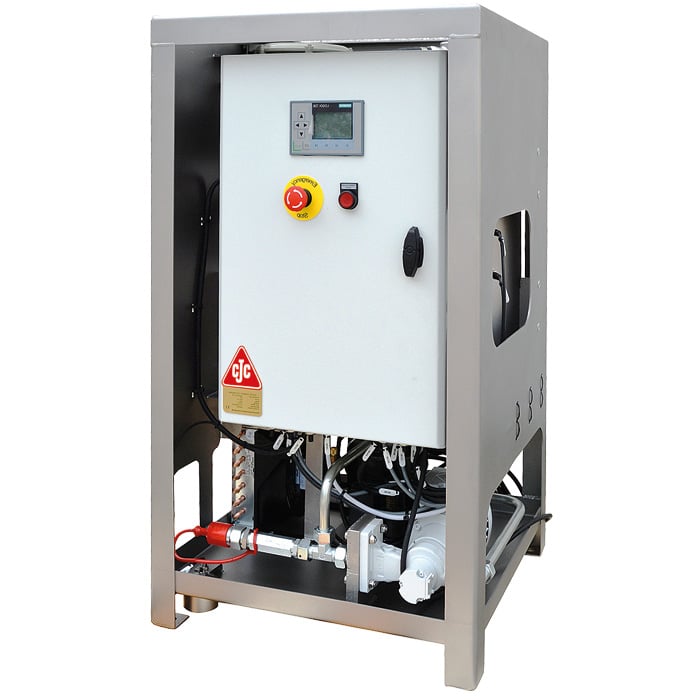
Desorber D10 for oil drying
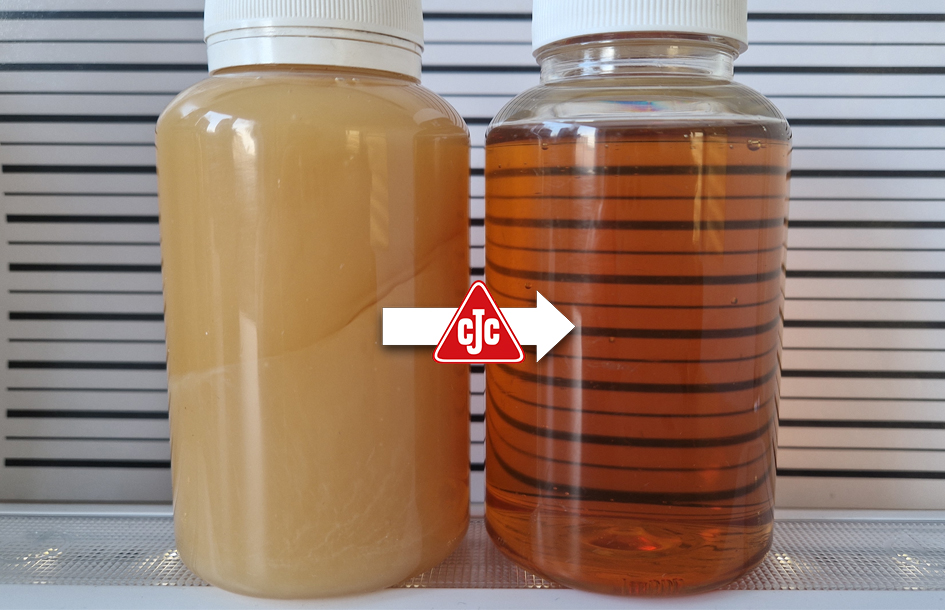
Desorbers D10 from CJC® ensure fast and continuous oil drying — independent of machine operation. Whether hydraulic, gear, lubricating, machining, leakage or quenching oil, based on mineral oil or as a synthetic fluid: The D10 removes dissolved and emulsified water extremely efficiently and reduces the water content in the lubricant to below 100 ppm – even in stable emulsions with up to 700,000 ppm water. The Desorber D10 works in off-line operation or on a free-standing tank, regardless of viscosity, additive package and air content in the lubricant.
How you benefit from installing the CJC® D10
- Stable viscosity for reliable lubrication of all components
- Longer oil service life due to improved protection of lubricant and additives
- Prevent deposits and sludge build-up for clean oil circuits
- Less wear, corrosion and cavitation on components
- Ensure air separation and minimize the risk of foaming oil
- Prevent the spread of bacteria, yeasts and fungi in the oil
After solids, water is the second most common cause of failures and malfunctions in lubricating oil and hydraulic systems. Your solution: CJC® Desorber
Application areas & installation example — Desorber D10
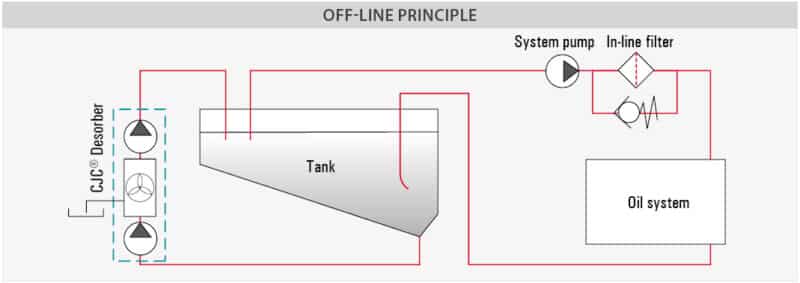
The pump in the oil inlet of the desorber D10 sucks in the oil. In the desorber chamber, cold, dry air flows in the opposite direction to the warm, moist oil. On contact, the air heats up and absorbs large quantities of moisture – at a constantly low system pressure of less than 2 bar. The warm, moist air then cools down and the water separates as condensate.
Features — Desorber D10
Oil volume, dimensioning e.g.: 1,500 Litres
Installation: flexible, e.g. in the off-line circuit or on a free-standing tank
Design temperature: 60 °C
Viscosity range: up to ISO VG 320
Water content in the oil, max.: 700,000 ppm (70%)
Water separation: water content permanently < 100 ppm (0.01%)
Supply voltage: 1 x 208 V @ 60Hz, 1 x 230 V @ 50-60 Hz, 3 x 400 @ 50Hz or 3 x 440-480 V @ 60 Hz
Power consumption: 2.6 kW @ 208-230 V, 3 kW @ 400-480 V
Current: 12.5 A @ 208 V, 11.3 A @ 230 V, 4.3 A @ 400 V or 3.9 A @ 440-480 V
Pump flow (24/7): 45—55 Litres per hour
System pressure (oil inlet), max.: 0.5 (PV) or 3.5 bar (PVM)
Weight, approx.: 125 kg
Dimensions, L x B x H: 570 x 570 x 1,000 mm
Equipment:
Standard:
- Pump with motor
- electrical control with an integrated alarm system
- Leakage monitoring
- Sample point for oil or fluid analysis
- automatic water separation
Download product data sheet:
All sizes and variants — without and with depth filter

That say our customers
“I am completely satisfied with the investment. Oil drying takes place very quickly and without machine downtime. Thus, we keep the production stable, have time to look for the failure cause, avoid the oil change and waste oil disposal, and maintain the oil quality.”

“The Desorber works excellently in this application. I was impressed by the results and surprised how efficiently the Desorber dewatered the oil. The Desorber is easy to operate and is low-maintenance.”
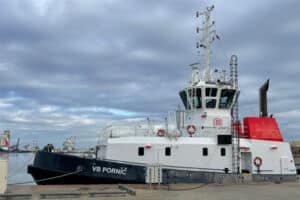
“The CJC® Desorber allows us to operate the tug boat until the regular inspection in the dry dock in 6 months. The oil analysis results speak for themselves and substantiate the efficiency of the Desorber.”
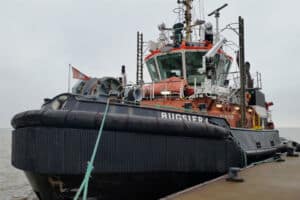
“It was only with the Desorber that the gear oil could finally be dried satisfactorily. Without CJC®, we would have had to change the 1,500 litres of gear oil soon. By avoiding the oil change, we were able to save EUR 4,890 (EUR 3.26/litre) – an important contribution not only in terms of budget but also in terms of resource savings. The excellent results convinced us, so we decided to purchase two identical Desorbers for our tug boats, “Bugsier 5” and “Bugsier 6”.
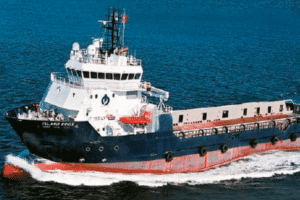
“The Desorber is ideal for such operations because it works continuously while the vessel is at sea. The results are very satisfactory. The Desorber works very well and will further reduce the water content.”
Speak directly to your regional fluid expert for oil drying
Whether acute or permanent water ingress – we will find the perfect solution for your system and your oil. Our fluid experts always advise you with a focus on feasibility and cost-effectiveness.
- Personal advice – by telephone or directly on site at your application
- Assessment of your oil analyses – with solution-oriented recommendations
- Support even for special and tricky challenges